By Sewheat Asfaha, Strategic Grants & Impact Manager and Mark Greer, Philanthropic Advisor, Phīla Engaged Giving
Will political giving actually make a difference?
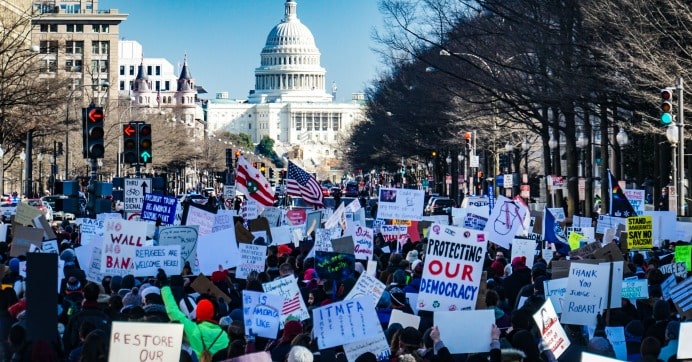
That question is top of mind for many donors this year as we approach midterm elections in an unsettled and overwhelming landscape. A landscape full of intimidating threats, loopholes, and misinformation – but also inspiring leaders, energy, and opportunities to expand inclusion. These opportunities don’t come to life on their own; much like an ecosystem, they require persistent cultivation to ensure the environment is ripe for growth.
Towards that end, our team recently hosted a learning session on political giving – moderated by Sofia Michelakis – to help donors explore how they can engage in this year’s election cycle while also supporting a healthy democracy for the long term.
We were thrilled to feature two leading authorities on political giving: Tiana Epps-Johnson, CEO of the Center for Tech and Civic Life, who is doing groundbreaking work to make U.S. elections more inclusive and secure, and Alexandra Acker-Lyons, president and founder of AL Advising, a political strategist and advisor who has worked with some of the nation’s leading donors, campaigns, and organizations.
Here are a few key takeaways from the conversation:
Planting Seeds: Key Tips for Political Giving in 2026
1. You don’t need a big strategy to get started.
Philanthropic and political giving can seem daunting and complex, deterring many from getting more involved. Advice from Al and Tiana: Join a network of peers. “A space like this is a hack,” said Tiana. “Being in trusted peer networks where you can have access to expert advisors and practitioners can help you navigate the landscape.”
Intermediaries and donors are building values aligned communities that can support you and increase your confidence in your decisions.
2. Think about your political giving in two-year cycles.
Even-numbered years, when national elections are happening, are a good time to allocate a higher percentage of your funding to non-tax deductible contributions to support candidates and 501(c)4 organizations that can engage in political activities. Al shared that giving early in election years is best, but be sure to save some funding for unexpected opportunities that may emerge in August and September.
Odd years are a good time to allocate a higher percentage to tax-deductible contributions that support 501(c)3 nonprofit organizations that are not allowed to engage directly in political campaigns, but can impact the landscape through voter education, litigation, and voter registration efforts.
3. Investing in election design matters.
From the formatting of mail-in ballots to cybersecurity measures to safeguard voting systems, the architecture of our elections is crucial to increasing a more inclusive democracy. To put it simply, using accessible voter materials and technology helps more ballots get counted.
Tiana highlighted that U.S. elections are extremely decentralized — with over 8,000 departments administering elections across the country. There is no unified federal body ensuring all these departments are aligned. However, nonprofit leaders such as the Election Security Exchange are stepping up and setting best practices for secure elections.
As part of your giving, consider supporting projects that help enfranchise more voters.
4. Set a budget and priorities for your political giving.
A good starting place is to set a two-year budget and start by adding 25% to your current charitable giving budget. Reflect on how that number feels for you.
Additionally, defining your core areas of interest will help you focus your giving. For instance, you might prioritize specific candidate demographics, geographies, or issues – such as candidates who are women or people of color, races in the Midwest, or initiatives focused on climate or health care.
When you map out your priorities, you’re better able to stay grounded and committed throughout election cycles, investing deeply and allowing time for projects to fully develop.
5. Consider adopting a state.
For progressive voters who live in a reliably “blue” state such as Washington, you might wonder what it looks like to focus your giving in parts of the country that tend to have more competitive races.
Al says one easy way to make an impact is by adopting a “purple” or “red” state, where your giving might make a bigger difference. Funding races in battleground states and advocacy for the long term can help create the infrastructure needed to achieve higher voter engagement and bigger wins.
Cultivating Strong Roots for the Long Term
Supporting democracy can sometimes feel like tending a garden in its dormant season – it can be challenging to see if your actions are having an impact or bearing fruit.
However, the dormant season is not a time of inactivity. Rather, it is a distinct phase where the focus should be on protection, consistent watering, and planning for future growth. On the surface, it may not look like much is happening within the ecosystem, but when you dig deeper, you’ll see the roots continue to grow, repairing damage and absorbing nutrients for spring.
Growth requires consistency. An ecosystem requires not just one ingredient, but multiple, continuous sources of energy. Likewise, a healthy democracy needs an ongoing flow of resources for many different efforts.
You might not see a new flower bloom this year. But with the proper care, we’ll begin to have a healthier foundation, and strong roots that can weather storms.