
By Sofia Michelakis, Phīla Engaged Giving
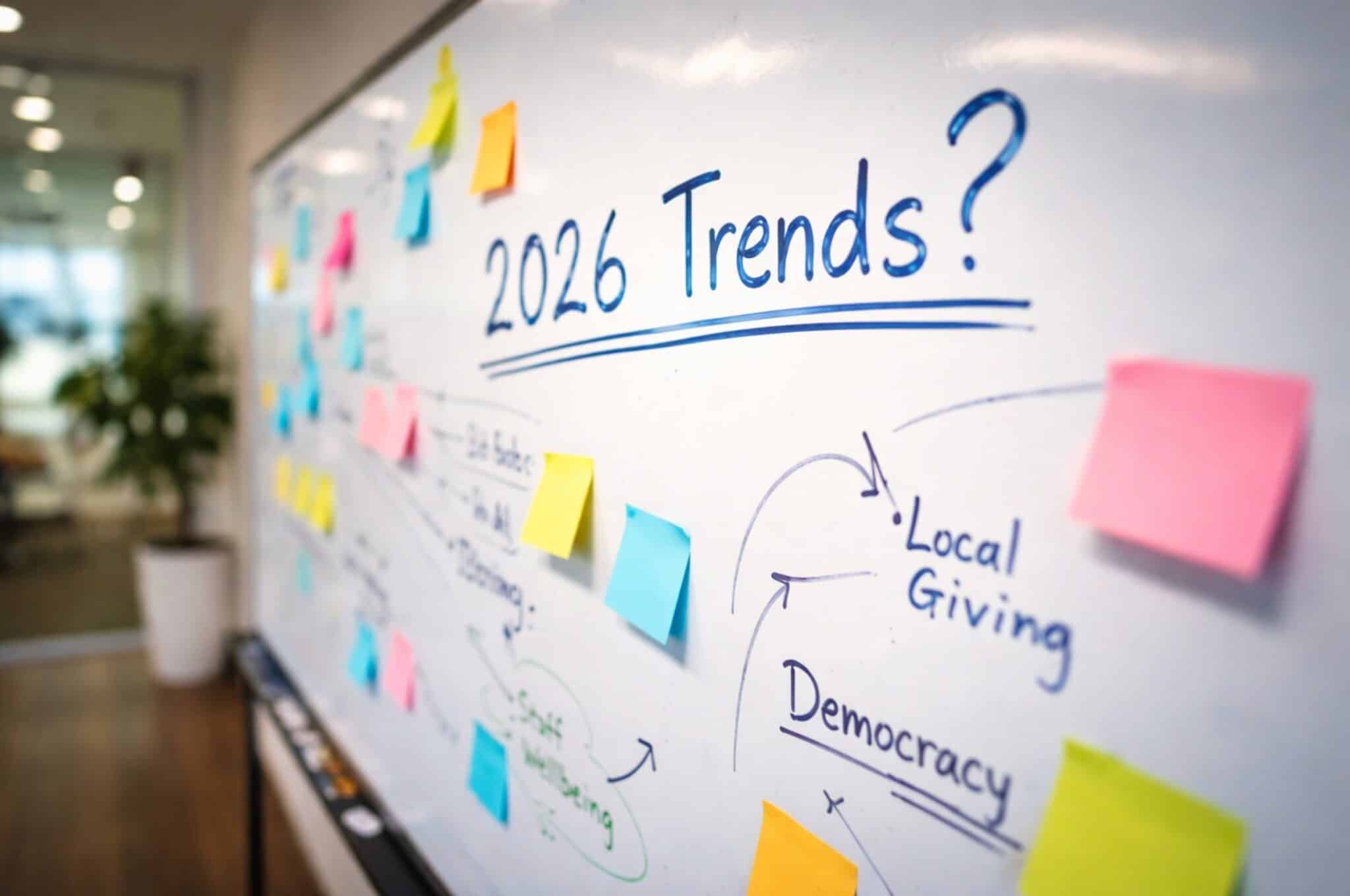
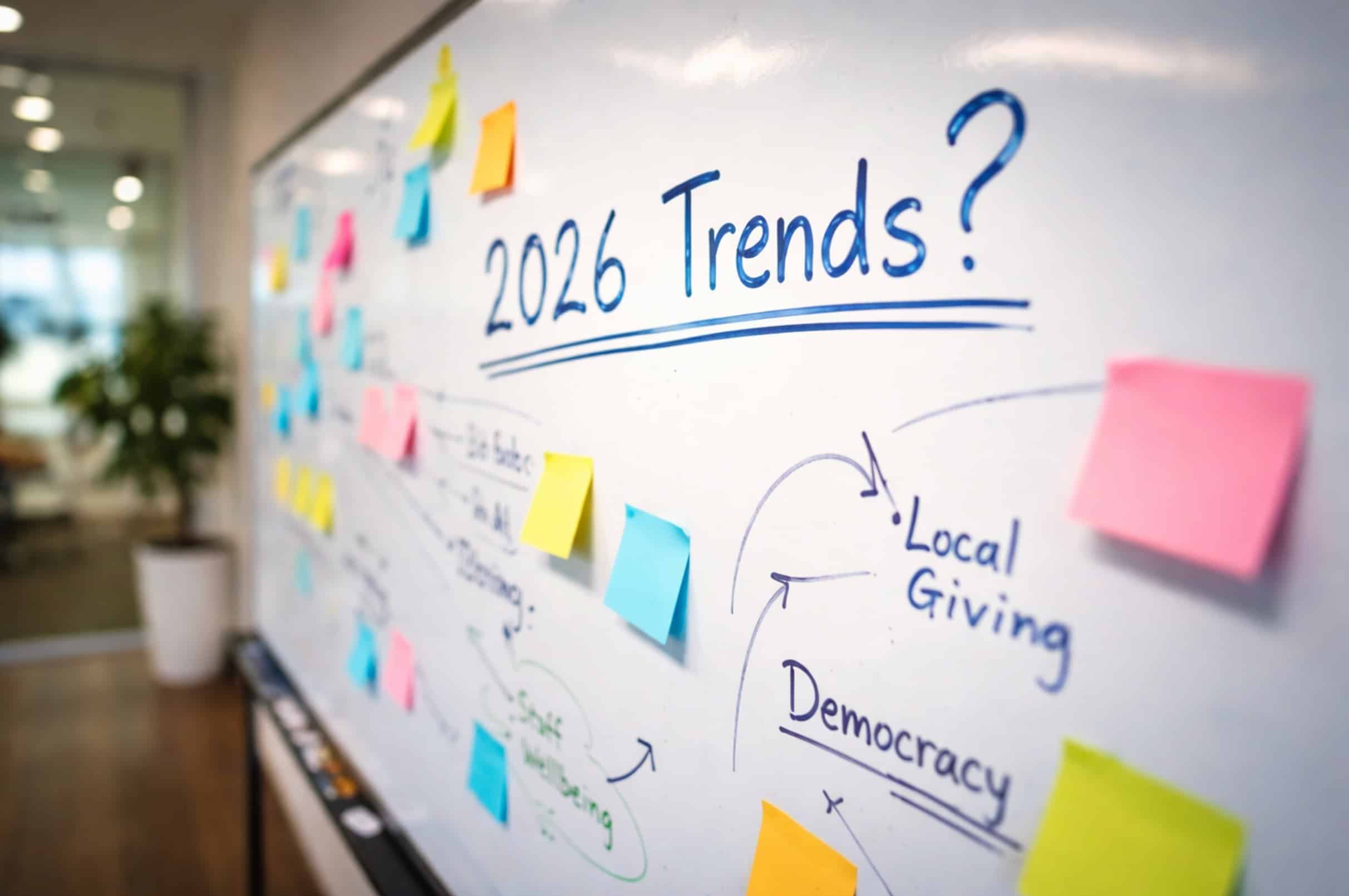
Every January, I find myself reading the year ahead philanthropy trend pieces. This year, much of what I read felt familiar, yet incomplete. Below are the themes that show up most consistently, paired with our perspective on what they mean for donors and advisors making real-world decisions.
1. Philanthropy Is No Longer Adjacent to Politics — It’s Operating Inside It
Federal funding cuts. Policy whiplash. Heightened scrutiny of nonprofits and foundations. Anxiety across institutions large and small.
Across the trend pieces, there is broad agreement that philanthropy is navigating political volatility, government retrenchment, and real threats to civil society. Much of the focus is on short-term, reactive responses: how donors and institutions are adjusting to what government is doing (or failing to do), often to reduce risk or preserve flexibility. Running through this discussion is a shared concern about philanthropic independence, the freedom to give according to one’s values.
What is increasingly implicit — and now unavoidable — is that the emotional and physical safety of donors and nonprofit leaders has become part of the philanthropic landscape. We’ve seen more donors choose to give anonymously out of concern for safety, privacy, and targeted scrutiny.
What receives far less attention are proactive approaches. Many donors are intentionally investing in the conditions that allow a healthy democracy to function, such as civic participation, voter protection, community organizing, and campaign finance reform. At Phīla, we support clients in incorporating political giving as part of their broader philanthropic strategy. Even when contributions aren’t tax-deductible, these clients recognize that a thriving democracy is essential for communities to have agency and the ability to shape their own futures.
2. Participation in Giving Is Declining While Complexity Is Rising
Across the trend literature, two related challenges surface repeatedly.
The first is a participation problem. Fewer everyday donors are giving, even as community needs increase and government support continues to decline. Policy efforts, including tax changes for non-itemizers, may help at the margins but haven’t reversed the broader erosion of broad-based giving.
The second is a complexity problem. As philanthropy becomes more sophisticated, affluent donors face more vehicles, more choices, and higher expectations. At the same time, an increasing share of philanthropic capital is parked in donor-advised funds and other vehicles, often stalled by uncertainty about priorities, timing, or decision-making.
Put simply: fewer people are giving at all, and more money is sitting on the sidelines.
When participation narrows and capital concentrates, the way decisions are made and the speed at which resources move have outsized impact. From our experience, the fastest ways to mobilize large-scale funding right now include:
- Collaborative funds and pooled vehicles,
- Trusted intermediaries and fiscal sponsors,
- Clear decision frameworks and governance, and
- Experienced philanthropy advisors who help donors move from intention to action.
These approaches move money faster while helping donors give with confidence, even amid complexity.
3. Place-Based Giving in an Interconnected World
Several trend pieces point to renewed interest in place-based and local giving. Donors want to support the communities they know and feel connected to.
That impulse can be powerful, but it also has tradeoffs. While local giving strengthens communities with dense philanthropic resources, it risks leaving rural regions and global efforts underfunded. Historically, only a small share of U.S. charitable giving has gone to global causes, even before recent cuts to foreign aid.
We often advise donors to continue giving locally, while also considering ways to intentionally dedicate a portion of giving toward rural and global efforts. In an interconnected world, resilience anywhere depends on stability everywhere.
4. AI Is More Than a Tool — It’s Reshaping Power, Work, and Voice
AI appears across the trend articles, largely framed as a tool: improving efficiency, combating (or adding to) misinformation, supporting overstretched staff, or raising ethical questions about authenticity and labor. One analysis goes further, examining the environmental impacts of AI, which disproportionately burden vulnerable communities.
Those considerations are important. But they still undersell what’s at stake.
When I wrote about AI two years ago, my concern wasn’t primarily productivity or misinformation, but power and agency. Who shapes narratives? Whose judgment is deferred to machines? What happens to critical thinking, empathy, and moral reasoning when cognitive work is increasingly outsourced? As the Johnson Center’s analysis notes, underlying data structures carry high risks of bias and broader societal impact.
AI doesn’t just accelerate work; it reshapes how people process information, relate to one another, and make decisions. It can also exacerbate economic inequality as workers are displaced and wealth concentrates among technology owners.
For philanthropy, the question is no longer whether to use AI or not. That ship has sailed. The real question is how funders engage with AI as a social force — one that affects democracy, emotional wellbeing, inequity, and whose voices are heard.
5. Staff Wellbeing Is Mission-Critical
Burnout, turnover, and chronic stress are increasingly recognized as systemic risks to effectiveness, especially as nonprofits navigate funding volatility and rising demand.
This is one area where philanthropy is catching up to what practitioners have long known: exhausted people cannot build resilient institutions. When staff are stretched beyond capacity, programs slow or shrink, institutional knowledge is lost, and communities feel the impact.
Recent analyses, alongside work by my colleague Celiz Aguilar McClish on rest as community care, point to wellbeing as an organizational resilience strategy, not a perk. Practices gaining traction include embedding wellbeing into organizational culture, co-leadership and shared responsibility models, dedicated funding for sabbaticals and structured rest, and flexible, unrestricted support that allows organizations to respond as conditions change.
6. Women and Next Gen Philanthropic Leadership
Women and Next Gen philanthropists feature prominently across the trend pieces, often lauded for being generous, creative, or “ones to watch.”
What’s less often explored is how these donors are changing the nature of leadership itself. Many are less interested in hierarchy or control and more focused on collaboration, learning, and shared problem-solving.
For advisors, fundraisers, and institutions, this shift has implications. Supporting women and Next Gen donors well often means leaning into more collaborative relationships. Inviting curiosity, dialogue, and shared problem-solving alongside these donors can go a long way.
And for women and Next Gen givers themselves: if you’ve ever felt slightly out of step with traditional philanthropic expectations, that’s not a liability. It’s often a signal that you’re helping redefine them.
Looking Ahead
These trends aren’t abstract for us. They are present every day in conversations with clients navigating political uncertainty, evolving leadership, and change. If any of these themes are showing up in your own thinking as a donor or professional advisor, we’re always open to a conversation about how to support your philanthropic work with clarity and intention.
References
Childress, R. (2026, January 7). 5 Trends That Will Shape Fundraising in 2026. The Chronicle of Philanthropy.
Dorothy A. Johnson Center for Philanthropy. (2026, January 14). 11 Trends in Philanthropy for 2026 and its companion piece Weighing the Power of AI Against Its Impact.
Foundation Source. (2025). 2026 Giving Outlook.
Why Philanthropy Matters. (2025). What Next? Philanthropy Trends and Predictions for 2026.