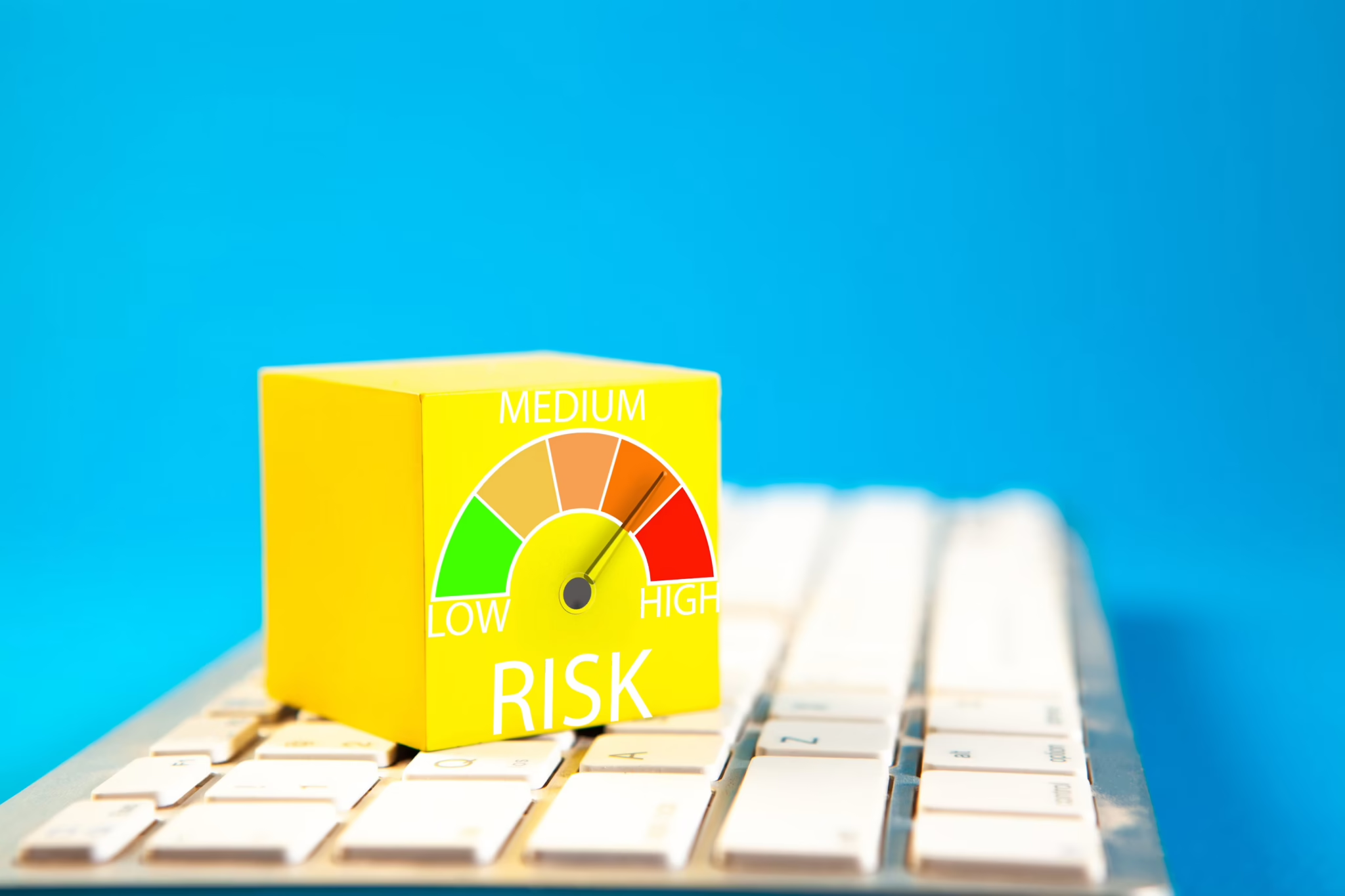

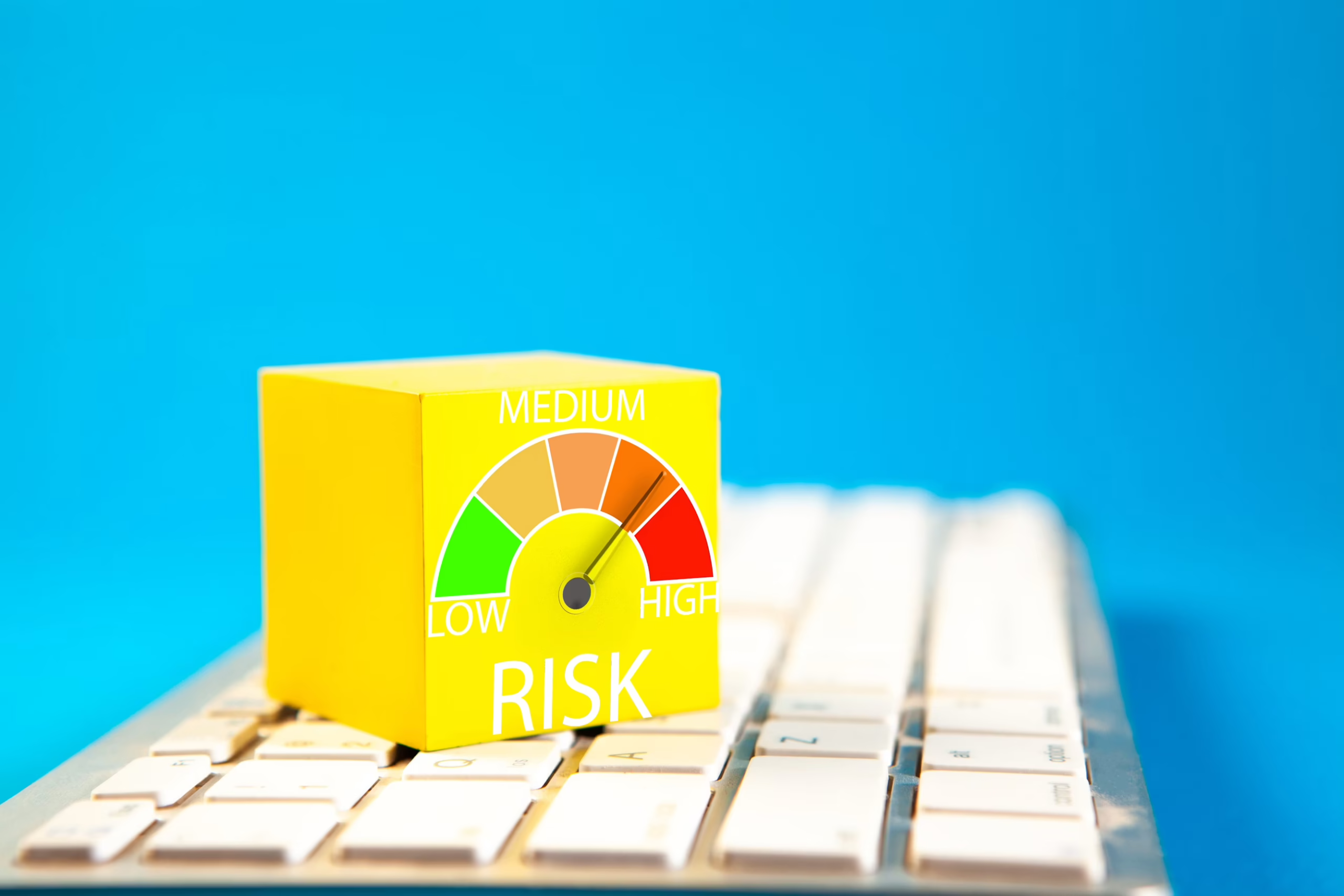
If you’re like me, you’re reading the news each day wondering what could possibly come next–a war on a new front, another pandemic-inducing virus, a 2nd quarter report bloodbath? Economic and geopolitical conditions all foster unstable markets and possibly even a dreaded bear market.
Even by recent historical standards, the level of market volatility since March has been extraordinary. The VIX — often called the market’s “fear gauge” — stayed elevated for weeks at a time, rarely returning to the sub-20 range typically associated with more stable markets. Instead, investors faced repeated spikes above 30, reflecting ongoing uncertainty, rapid market swings, and a highly reactive investment environment.Yet, despite the volatility, markets overall are showing resilience.
At this point you might be wondering “what is she talking about? She’s no financial analyst.” True, I am not, but as a business owner and an advisor who works very closely with our clients and their financial teams, I do know a good bit about the markets, and more importantly, how the wealthy feel about their wealth in the markets, and how those perceptions affect the philanthropic sector. And that’s what I’m here to talk to you about.
No matter how much money one has, when threats to safety or well-being are sensed, it is human nature to want to hunker down and pull back. To not acknowledge fear as the powerful human instinct it is would be to completely disregard and overlook an important driver in our society—for good or for ill.
We last saw this at play during COVID when the world shut down and seemed to invert on its axis. So many were out of work as businesses closed, our inequitable healthcare system was strained and struggled to keep the most vulnerable alive, and for a moment, the stock market plummeted as a result. But that downturn didn’t last long. While many were still sick, shut in and unemployed, the stock market rebounded to astronomical levels.
During the first two years of the pandemic,wealthy individuals experienced historic gains, the top 1% of the world’s population captured roughly two-thirds of the $42 trillion in new global wealth generated over the first two years of the crisis. And U.S. billionaires saw their combined wealth grow by $1.7 trillion to over $2.1 trillion between March 2020 and early 2022. As a result, we learned important lessons about charitable giving that we can apply to the situation we find ourselves in today.
Just like the stock market, philanthropy also has boom and bust cycles. Amir Pasic, dean of the Lilly Family School of Philanthropy, said the pandemic disrupted giving patterns in ways not seen in decades. Communities hit hardest by COVID-19 saw sharper declines in giving rates. The study, The Giving Environment: Giving During Times of Uncertainty, tracks trends in charitable giving before and during the pandemic.
Researchers found that the share of Americans donating to charity fell from 50.9% in 2018 to 46.9% in 2020. This decline continues a 20-year trend, as household participation dropped from two-thirds in 2000 to about half in 2018. The pandemic accelerated this trend, the report said.
We are now once again facing a unique disaster and predictably, giving will fall. This time, the nonprofit sector is already severely hampered by drastic cuts in federal funding and threats to its very existence. While donors will invariably wrestle with their own feelings of financial instability and loss, I encourage givers to also factor community well-being and safety in their calculations of risk and not be swayed to tie your giving to market downturns.
Even though philanthropy is directly tied to capital markets, remember that its purpose and utility is the exact opposite. If things are volatile enough to seriously shake the markets, imagine what that means for the 47% of Americans who do not own investments at all and have far less protection from economic instability. Many rely on nonprofits and community institutions for essential support just as those organizations are facing rising demand, funding pressure, and increasing uncertainty themselves.
I’ve written before about the importance of expanding our understanding of risk beyond the performance of individual portfolios to include the health of the communities around us. Nonprofits, schools, arts organizations, clinics, food banks, and advocacy groups depend on a reasonable degree of funding stability to plan responsibly, retain staff, and deliver services consistently. When philanthropy becomes volatile — whether because of market fear, delayed decision-making, or reduced giving — the effects are immediate and real. Programs are scaled back, hiring freezes begin, long-term projects stall, and communities already under strain lose critical support. Compounding the challenge, economic downturns often increase demand for services at the exact moment many organizations are facing greater uncertainty themselves.
In investing, we are often reminded that long-term discipline matters most during periods of uncertainty. Philanthropy may benefit from a similar mindset. Rather than making reactive decisions based solely on short-term market swings, this moment invites a shift toward more multi-year thinking about how resources are deployed and what communities need to remain resilient over time.
I believe a downturn is coming — I just do not know when or what shape it will take. Now is the time to be proactive and think through how you want to respond before pressure and uncertainty narrow your field of vision. I’m intentionally not recommending a specific course of action because every family, foundation, or donor has different financial realities, values, obligations, and risk tolerances. However, I do encourage thoughtful reflection around a few key questions:
- What are the commitments we would want to sustain even during a downturn?
- How do we want to pace our giving over multiple years rather than making decisions one cycle at a time?
- How are we coordinating with our financial advisor around liquidity, timing, and planning?
- What flexibility do we want to build into our philanthropic approach so we can adapt thoughtfully rather than reactively?
And as you consider these questions, remember that periods of instability are precisely when communities and nonprofit organizations need steady partnership the most.
It’s normal for volatile times to influence how and when giving happens, but they should not change the deeper values and long-term goals that philanthropy is meant to serve. Thoughtful planning can help families and foundations make decisions with greater clarity, flexibility, and intention rather than reacting solely from fear or uncertainty. This is where strong partnership matters. Financial, legal, and philanthropic advisors each play an important role in helping donors stay grounded in purpose while navigating changing conditions with care and perspective.
Markets will rise and fall. Moments of uncertainty, volatility, and correction are not anomalies; they are part of the natural rhythm of economic cycles. The opportunity for philanthropy is not to predict every turn of the market, but to remain grounded in clarity of purpose through them. When giving is guided by long-term values, thoughtful planning, and a broader understanding of community impact, it becomes steadier, more resilient, and better positioned to meet the moments when it is needed most.
If you’re curious how we work with clients and their other professional advisors, don’t hesitate to contact me. I am always open to this conversation.